
Pleasanton Neighbors by Block
An immediate-block search works best when each source answers a different question. The Alameda County Parcel Viewer shows parcel geometry and APNs around a target situs. Assessment and tax records add property, assessment, and mailing context, while Pleasanton planning records add project dates and named applicants. A voter file can carry residence data only through an authorized channel. Historic reverse directories and census schedules can show a dated household snapshot. Together, these sources map a block without claiming any database lists everyone who lives there.
| Source | What It Shows About a Block | Access |
|---|---|---|
| Alameda County Parcel Viewer | Parcel geometry, APNs, shared boundaries, and nearby lots | Free map browsing; zoom, pan, and map selection |
| Assessment and tax records | APN, situs, assessed characteristics, and mailing context | APN, site-address, or map search; Assessor counter fallback |
| Pleasanton permits and planning | Projects, applicants, contractors, scope, and dates by address | City records portal, counter, or records request |
| Landscape Maintenance Districts | Named district geography and shared public improvements | City webpage and reports; not a resident list |
| California voter file | Potential residence data only for an authorized statutory purpose | Self-lookup or authorized request; not an open block roll |
| Historic reverse directories and census | Listed occupants and household snapshots at past dates | Pleasanton Library, Museum on Main, databases, and microfilm |
An owner clue is not an occupancy fact. The situs is the land’s physical address; a tax mailing address is where notices go and may point elsewhere. A deed names parties to an instrument, a permit names an applicant or contractor, and a directory entry reflects the year and publication coverage. None alone establishes every household member. Save the APN, source, record date, and address type for each result.
California’s voter-registration guidance explains why a block search must separate an individual status check from a public roster.
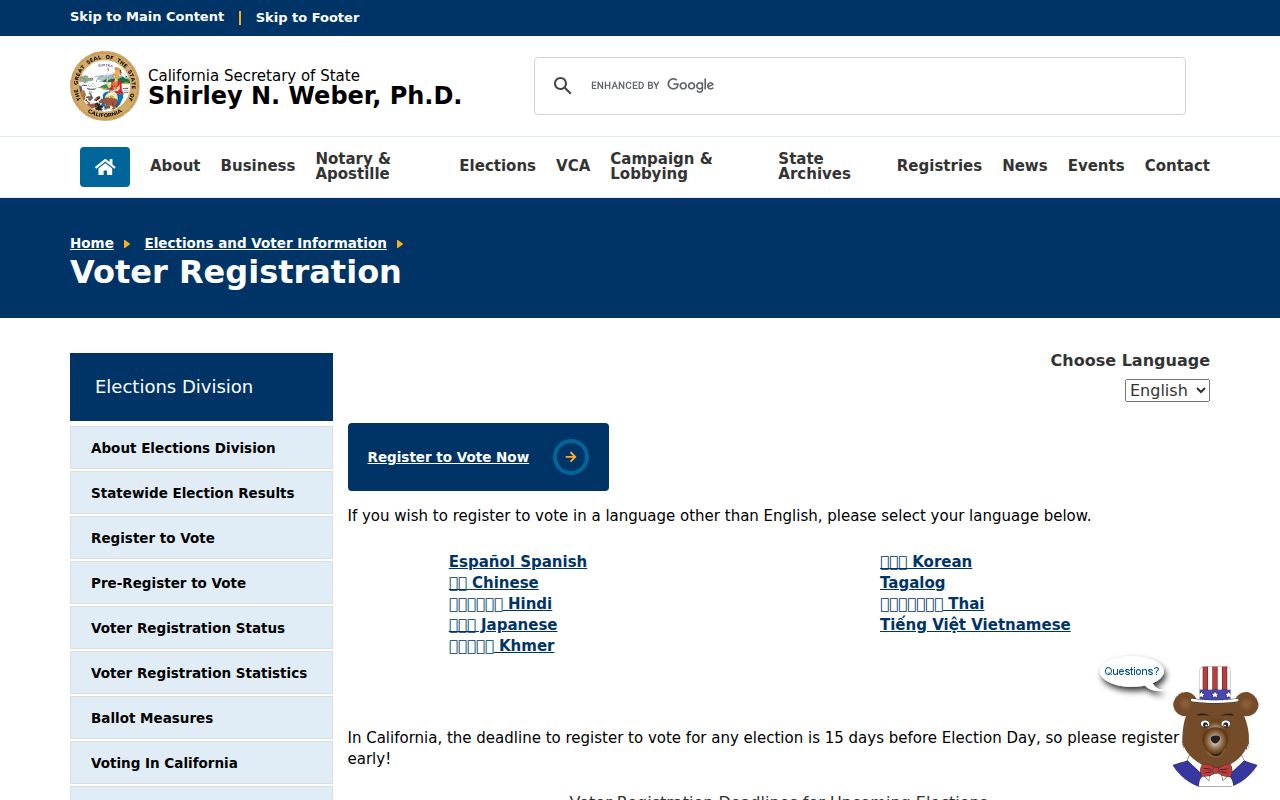
The guidance gives the voter layer a defined purpose instead of turning a status result into a claim about everyone on a street.
Map Pleasanton Neighbors by APN
Start with the target situs in the Alameda County Parcel Viewer. Search the address, then zoom and select the parcel when an address match is not enough. Record the APN and parcel outline before looking outward. The viewer supplies map and layer context, but owner names in GIS are not verified, so carry the APN into assessment records instead.
- Locate the physical address by site-address search or map selection.
- Select the target parcel and save its APN, situs, and map date.
- Click each parcel sharing a boundary; a lot across the street is a comparison, not a legally adjacent parcel.
- Repeat the APN check in assessment or tax records and add any address-keyed permit evidence.
Each APN becomes a research item. No verified public radius or buffer export was documented. When the goal becomes every address on a named street, use the Pleasanton street directory walkthrough rather than stretching an immediate-block method beyond its evidence.
Pleasanton Neighbors: Owners and Occupants
The common block mistake is collapsing ownership and occupancy into one label. Assessment information can connect an APN to property details and a tax mailing destination. The recorder’s index connects named parties to deeds and liens, but its records are party-keyed and the online name index reaches 1969-present. A parcel map may show an identifier without an owner name. These differences matter when a Pleasanton address is held by someone whose mailing address is elsewhere.
- Situs address
- The physical location of the parcel, distinct from the tax mailing destination.
- APN
- The county parcel identifier used to carry a block clue into assessment and tax records.
- Occupancy clue
- A dated, record-linked association that does not establish the full household at an address.
Pleasanton permits and planning files add applicants, contractors, architects, project descriptions, dates, inspection status, and plans. They connect activity to an address, not necessarily a resident. Search the city’s building and permit services, inspect the Community Development counter, or make a narrow CPRA request identifying the address, date span, department, and record type. A request seeks identifiable records, not an answer about a person.
If a parcel clue must be tied to a deed, the Alameda Official Public Records index covers 1969-present online; 1853-1968 alphabetic indexes and copy requests use the Oakland counter, mail, or phone path. The Assessor’s Oakland lobby and Dublin satellite provide public help when map search fails, while the separate Treasurer-Tax Collector channel handles parcel-number keyed tax bills, payment status, and delinquency information.
Pleasanton Neighborhood Contacts
Geography has a community vocabulary in Pleasanton, but a neighborhood name is not a resident directory. City landscape material names Bonde Ranch and Windsor in district administration. East Pleasanton planning material also names Ironwood, Village at Ironwood, Autumn Glen/Heritage Valley, Danbury Park, Stoneridge Park, and Mohr/Martin. Those labels help locate planning packets, permits, and shared-improvement records when a street clue is incomplete.
Pleasanton Downtown Association
Historic commercial core
Publishes organizational and business contacts, not a public resident roster.
Hacienda Owners Association
Hacienda business/community area
Publishes organizational and business contacts, not a public resident roster.
Landscape district records
Geography and shared improvements, not member names.
Downtown’s historic core points research toward newspapers, deeds, and historic surveys, while Hacienda, Stoneridge, and later subdivisions point toward modern parcel, permit, district, association, and corporate records. Those organizations can provide public-facing business or district contacts, not private member lists. HOA member lists and block-watch or congregational rosters remain private unless voluntarily published. Use an official channel for organization questions.
Pleasanton Voter Data Limits
California My Voter Status is a self-authenticated portal, not an open list for a Pleasanton block. It can return a user’s registration status and location, party preference, language preference, ballot status, polling place, election details, and county contact information. The form uses first and last name, date of birth, and either a California driver license or ID number or the last four digits of an SSN. A no-number option directs the user to election officials. New online registrations may take at least 24 hours to appear.
| Field Label | Type | Required | Options or Format |
|---|---|---|---|
| First name | Text | Yes | Exact registration match |
| Last name | Text | Yes | Exact registration match |
| Date of birth | Month/day/year selectors | Yes | Three-part date |
| California driver license or ID | Text | Conditional | Enter, or choose the no-number option |
| Social Security number, last four | Text | Conditional | Enter, or choose the no-number option |
Elections Code §2194 permits voter-registration information for election, scholarly, journalistic, political, or governmental purposes determined by the Secretary of State. Commercial use is prohibited and can be a misdemeanor. Government Code §7924.000 protects home street address, phone, email, precinct and registration numbers, prior registration data, driver license or ID number, SSN or unique identifier, and signature except as authorized. Voting history, when lawfully supplied, means participation, not ballot choices. Alameda Elections lists (510) 272-6933; the SOS lists elections@sos.ca.gov and (800) 345-8683.
The Elections Code §2194 text is the source to read before treating voter data as a block tool.
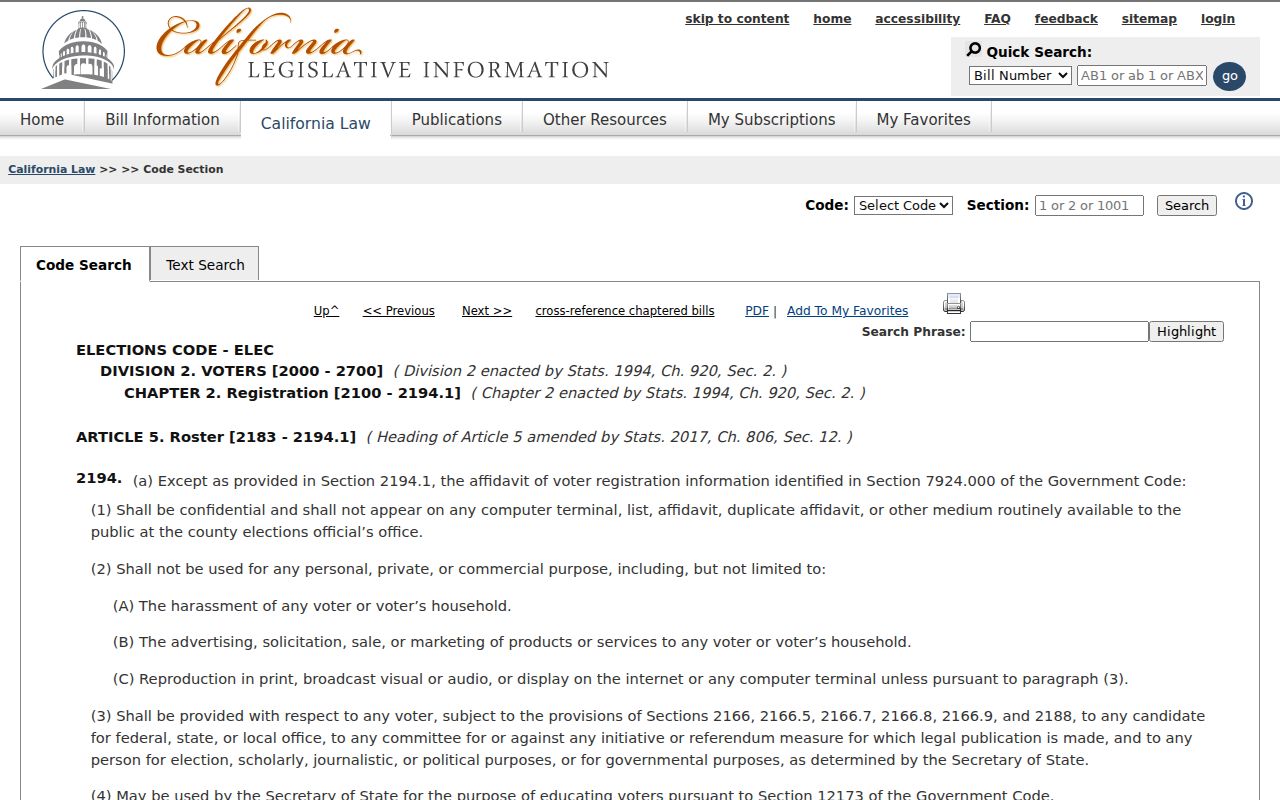
The statute explains why an ordinary visitor cannot enter a Pleasanton street and display every registered voter.
Historic Sources for Pleasanton Neighbors
Past households require a dated source. Pleasanton Library provides Ancestry Library Edition onsite, HeritageQuest through authenticated home access, and Fold3 for military collections. California residents can obtain a free library card, but licensed access rules differ. Museum on Main’s Sandi Thorne Research Center provides the hyper-local fallback with newspapers, photographs, maps, clippings, and organizational history. Its published material includes a strong digitized Pleasanton Times run for 1929-1933, selected bound volumes from 1951-1971, other scattered issues, and microfilm.
Search the Pleasanton Library resources for census, directory, school, church, local-history, and military clues, then consult the Museum on Main newspaper holdings for local notices. The exact Pleasanton city-directory or reverse-directory run is not officially published, so no publisher or year span should be assumed. A common-name hit needs an address, middle initial, spouse or relative, and date check. The library is at 400 Old Bernal Avenue, (925) 931-3400; Museum on Main is at 603 Main Street, (925) 462-2766. Confirm schedules and handling rules before an onsite visit. Library databases, the museum research center, the Livermore-Amador Genealogical Society’s Tri-Valley help, and onsite microfilm are complementary channels, not proof of current residence.
Official and Commercial Lookup Tools
The comparison separates official evidence from opaque packages. Official records show a custodian, a defined field set, and a date. Commercial lookup tools combine parcel, marketing, and other feeds; they may be stale or merge identities. The difference matters when a result is used to understand an immediate block.
| Category | Evidence Base | Main Caution |
|---|---|---|
| Official parcel and assessment | APN, situs, assessed characteristics, and tax mailing context | Not an all-household roster; owner-name mode in GIS is not verified |
| Official voter records | Authenticated self-status or authorized file | Not an open block list; purpose and confidentiality rules apply |
| Official historic sources | Dated directory, census, newspaper, and local-history items | Coverage gaps and old addresses require corroboration |
| Commercial neighbor-lookup tools | Mixed parcel, marketing, and other compiled feeds | May misidentify occupants, stale records, or merge people |
For a missing city record, the Pleasanton CPRA channel is the proper fallback under the California Public Records Act, Gov. Code §§7920.000-7931.000. Ask for an identifiable permit, planning packet, district report, or correspondence by address and date range. CPRA does not require an agency to create a new block list, and it does not override voter, court, or privacy restrictions. County deeds and tax material belong with the county custodian rather than a city request.
Privacy for Pleasanton Neighbors
Privacy is part of the block method, not an afterthought. California’s Safe at Home program can provide eligible survivors and specified threatened participants with a substitute mailing address, confidential voter registration, confidential name-change handling, and DMV suppression. It does not erase every historic record. Voter identifiers and street-address disclosure remain restricted under Government Code §7924.000, and DMV data is constrained by the federal DPPA. Utilities, delivery records, household composition, and private membership lists do not belong in a public block picture.
The California confidentiality rule explains why some voter fields are withheld even when a location is public.
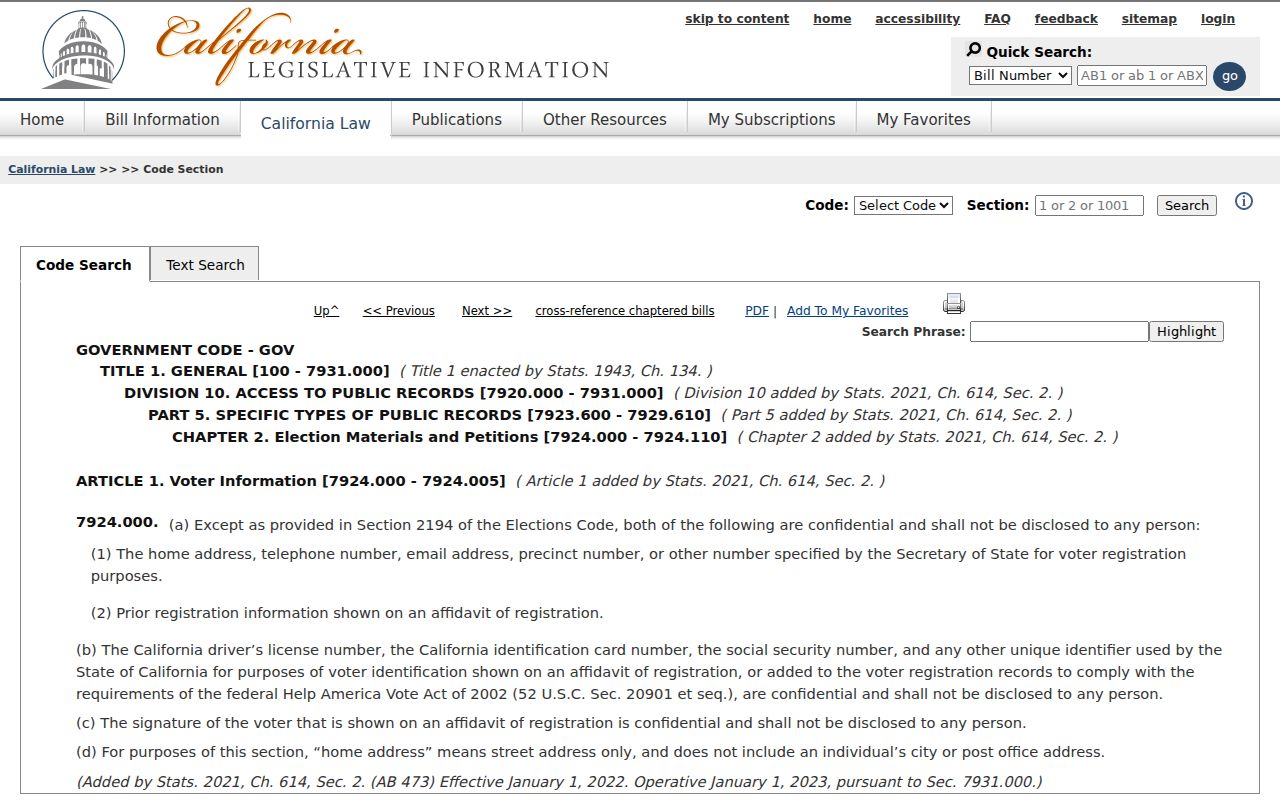
That limitation protects sensitive voter fields; it does not turn a parcel map into a resident roster.
The official California Megan’s Law registry is a separate public-safety record with its own disclosure rules, not a neighborhood roster or a substitute for parcel research.
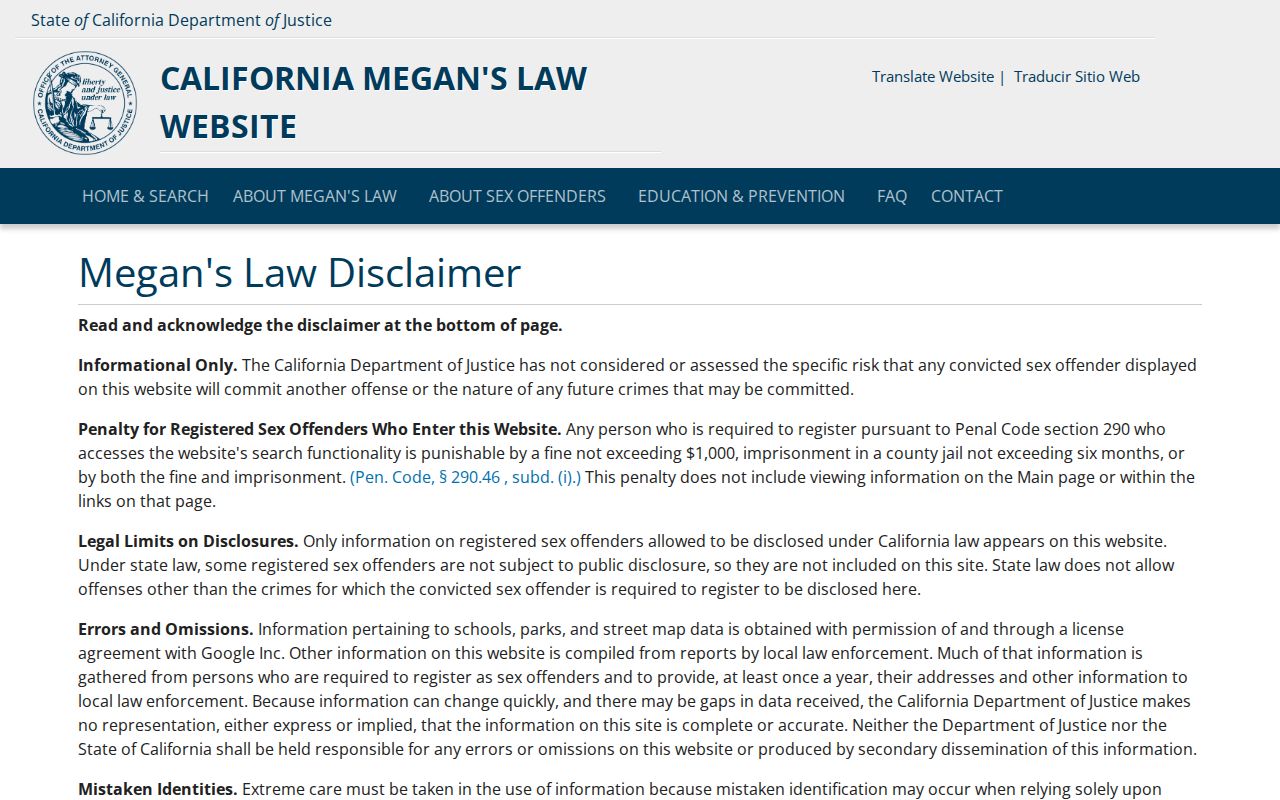
A registry result is a specific statutory record and should never be converted into an inference about every person at a parcel.
Lawful use. Pleasanton block research is for personal history, reconnecting, civic understanding, and safety awareness. Do not use parcel, voter, or published safety records to watch, harass, intimidate, or repeatedly follow anyone; California Penal Code §646.9 and related restrictions can apply.