
Start With a Pleasanton Residents Directory Question
A useful search begins with the record goal. A current property clue points toward the Alameda County assessor and parcel viewer. A deed or lien search starts with the county Clerk-Recorder’s party index. A court question belongs to Alameda Superior Court, since Pleasanton has no separate municipal court. A past household calls for the Pleasanton Library, Museum on Main, census material, and newspapers. These are different kinds of evidence, so one broad name search rarely settles identity on its own.
Use the resident directory as a map to custodians, not proof that everyone at an address will appear. An owner, tax-mail recipient, permit applicant, voter, and occupant can differ. Protected residents may have substitute addresses, while older rural households may be absent or labeled by township or county. State what the record says, its date, and what it cannot establish.
- Write down the name exactly, then add middle initials, former names, diacritics, and likely dates.
- Use the parcel viewer or a known address to capture the APN and situs address.
- Search the Clerk-Recorder index for the person as a grantor or grantee, then read the recorded instrument.
- Use My Voter Status only for the person who can authenticate that record, and follow the permitted-use rules.
- For older clues, pair directory, census, newspaper, probate, or library evidence with a dated official record.
Where Pleasanton Keeps Resident Records
Three levels matter. City offices hold permits, planning files, council records, staff contacts, and requests under the California Public Records Act. Alameda County holds the parcel, assessment, deed, tax, marriage, and court trails. California offices control statewide vital applications, professional licenses, business filings, and the rules around voter information. Each office answers a narrower question than the phrase “residents directory” suggests.
The Alameda County Clerk-Recorder at 1106 Madison Street in Oakland is the legal home of the recorded-document trail. The assessor’s public property route is keyed to APN, site address, or map selection. The county’s Dublin assessor location at 7600 Dublin Boulevard is a practical in-person option for Pleasanton researchers. The elections office supplies county assistance, but California’s online status tool is designed for a person checking their own registration.
Alameda County Clerk-Recorder
1106 Madison Street
Oakland, CA
(510) 272-6362
Alameda County Assessor
1221 Oak Street, Room 145
Oakland, CA
(510) 272-3787
Pleasanton Parcel Search Starts With APN
The Alameda County parcel viewer gives a physical starting point when a name search is too broad. Enter the site address, use the map, or work from an APN. The APN is the assessor’s parcel number. It is more stable for land research than a postal label, especially when an old street description, subdivision, or rural route does not match a current address.
A parcel card is not a household list. It connects an APN to a situs, assessment, map geometry, and tax links. A tax mailing address may differ from the physical parcel and does not prove who lives there. Carry the APN and legal description into the deed index; the recorded instrument supplies title language.
| Search field | How it works |
|---|---|
| APN | Enter the parcel identifier when it is known. |
| Site address | Use the physical address, not a tax mailing destination. |
| Map selection | Click a parcel when the address is unclear or the street has changed. |
| Zoom and pan | Browse the street and nearby parcels visually. |
| Layers | Review parcel and available jurisdiction or context layers with their dates. |
Use the Alameda County Parcel Viewer for the map, then compare the result with the assessment information route. An owner-name search was not verified as a public assessor mode, so the address or APN should lead.
The Pleasanton Recorder’s 1969 Divide
Alameda County’s recorded public records begin in 1853. The electronic name index reaches from 1969 forward. Records filed from 1853 through 1968 still exist, but the earlier grantor and grantee run must be searched in person at the Oakland counter. A search that ends at 1969 has reached an access boundary, not necessarily the start of the property story.
The online index is arranged around parties named in a document. Search surname variants and roles rather than expecting an address box to produce a complete chain. Deeds, deeds of trust, reconveyances, liens, releases, easements, notices, judgments, and maps can appear as different instrument types. A recorded image carries the legal description and terms; the index is only the finding aid.
Copies are paid. A plain copy is $3.50 per page. A certified copy costs $4.50 for the first page and $3.50 for each additional page. Online orders add a $2 convenience fee and use Visa or MasterCard. Mail requests use a check or money order, a self-addressed stamped envelope, and normally take 5 to 10 business days. New recordings may take two weeks before a copy can be ordered. In person, printing stops at 4:15 p.m., and requests after 4 p.m. move to the next day.
Alameda County’s Official Public Records entrance explains the current route. A paid copy-order form needs an instrument number. For a pre-1969 search, call the recorder for procedure, then plan for the counter, mail, or an identified book, page, reel, or image reference.
The Alameda County Clerk-Recorder page identifies the county office behind the deed and official-record trail.
Current Pleasanton Resident Directory Sources
Current resident clues are distributed among records that were created for other purposes. The assessor describes land and assessment. The recorder indexes named parties to documents. A voter status result belongs to the authenticated voter. A city permit identifies a project connection. A business or license filing identifies a public role. Treat each result as an association with a date, not as a claim that every person in a household is present.
| Record source | Useful clue | Keeper | Access |
|---|---|---|---|
| Assessor and parcel record | APN, situs, assessment, map, tax links | Alameda Assessor | Address, APN, or map |
| Recorded document index | Grantor, grantee, instrument, date | Clerk-Recorder | Free index, paid image |
| My Voter Status | One voter’s registration status and location | California SOS and county | Self-authentication |
| City records and permits | Applicants, owners, contractors, projects | Pleasanton | Posted records or CPRA request |
| Business and license filings | Registrant, agent, license status | California and county offices | Public search, role-specific |
For a single name, compare at least two independent clues. The Pleasanton resident lookup workflow uses a dated name link, a parcel or business connection, and a record that explains the relationship. The city’s public-records request route is for identifiable city records. It does not replace the county recorder, court clerk, or vital-record custodian.
Pleasanton Voter Status Is Private
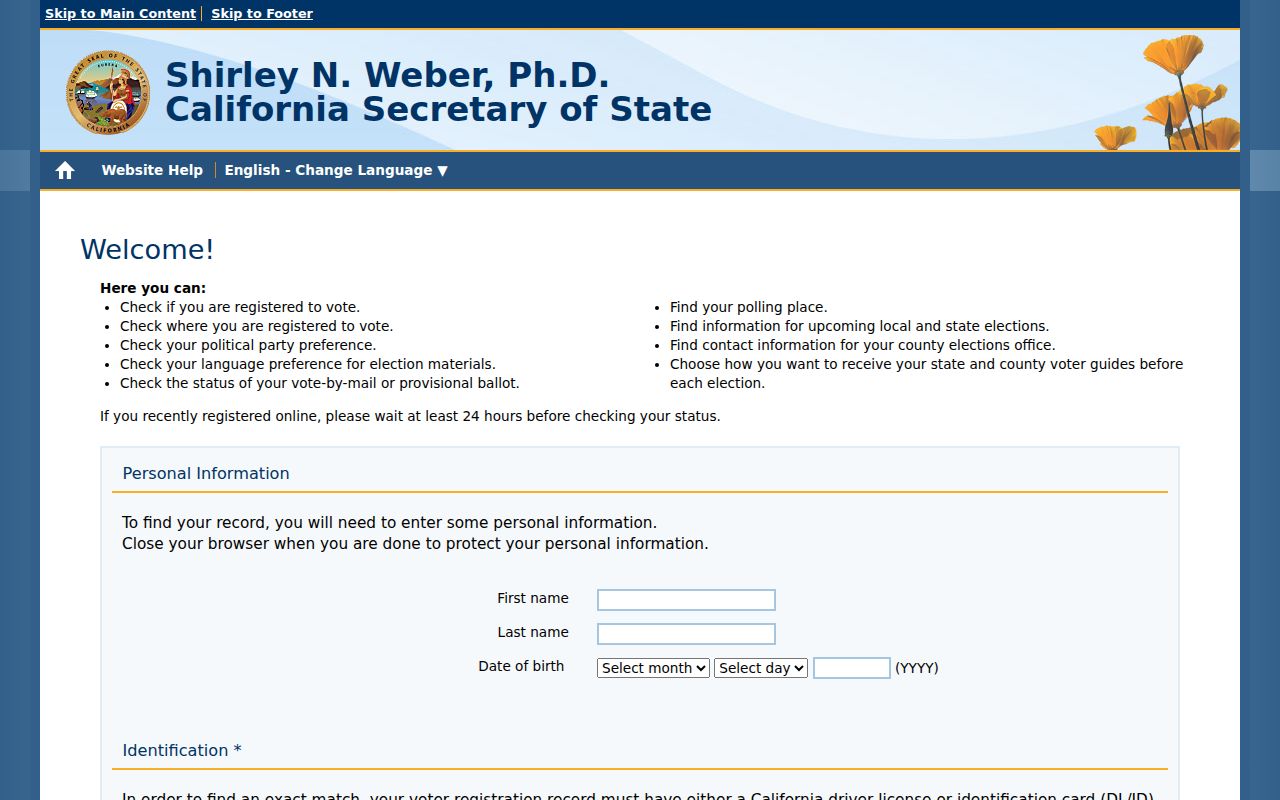
California My Voter Status is a self-authenticated service. It is not a public Pleasanton voter directory and cannot be used to enter a street and display every registered person. The form asks for first name, last name, date of birth, and either a California driver license or identification number or the last four digits of a Social Security number. A person who lacks those exact-match details is directed to Alameda elections or the Secretary of State.
A successful self-lookup can show registration status and location, political-party preference, language preference, ballot status, polling place, election details, and county contact information. Those fields describe the authenticated record. Elections Code §2194 controls release of voter registration information for election, scholarly, journalistic, political, or governmental purposes. Commercial use is prohibited. Government Code §7924.000 protects home street address, phone, email, precinct and registration numbers, prior registration data, license or ID information, Social Security details, unique identifiers, and signatures except as authorized.
The California My Voter Status form shows why a Pleasanton voter lookup is an identity check, not a name-only roll.
Pleasanton Court Names Need Context
Alameda Superior Court handles Pleasanton civil, criminal, family, juvenile, probate, small claims, traffic, and related matters. Its eCourt portal replaced older DomainWeb access in stages: civil moved beginning in October 2021, and family, probate, mental-health, and adoption access joined in September 2023. A case hit proves that a named party appears in a case. It does not prove that allegations are true or that two people with the same name are the same person.
| eCourt field | Use |
|---|---|
| Case number | Exact case mode and the stable case identifier. |
| Party name | Name mode for a person or business, with spelling variants. |
| Case type | Narrow civil, family, probate, or other available categories. |
| Filing date range | Reduce broad same-name results. |
| Calendar date | Search hearings in calendar mode. |
Search and calendar information may be free, while documents can require an account, payment, or clerk copy request. Public courthouse terminals can expose material that is not remote. Wills, warrants, subpoenaed documents, bonds, juvenile files, sealed cases, adoption files, and protected portions of family or mental-health matters are not open merely because a name is indexed.
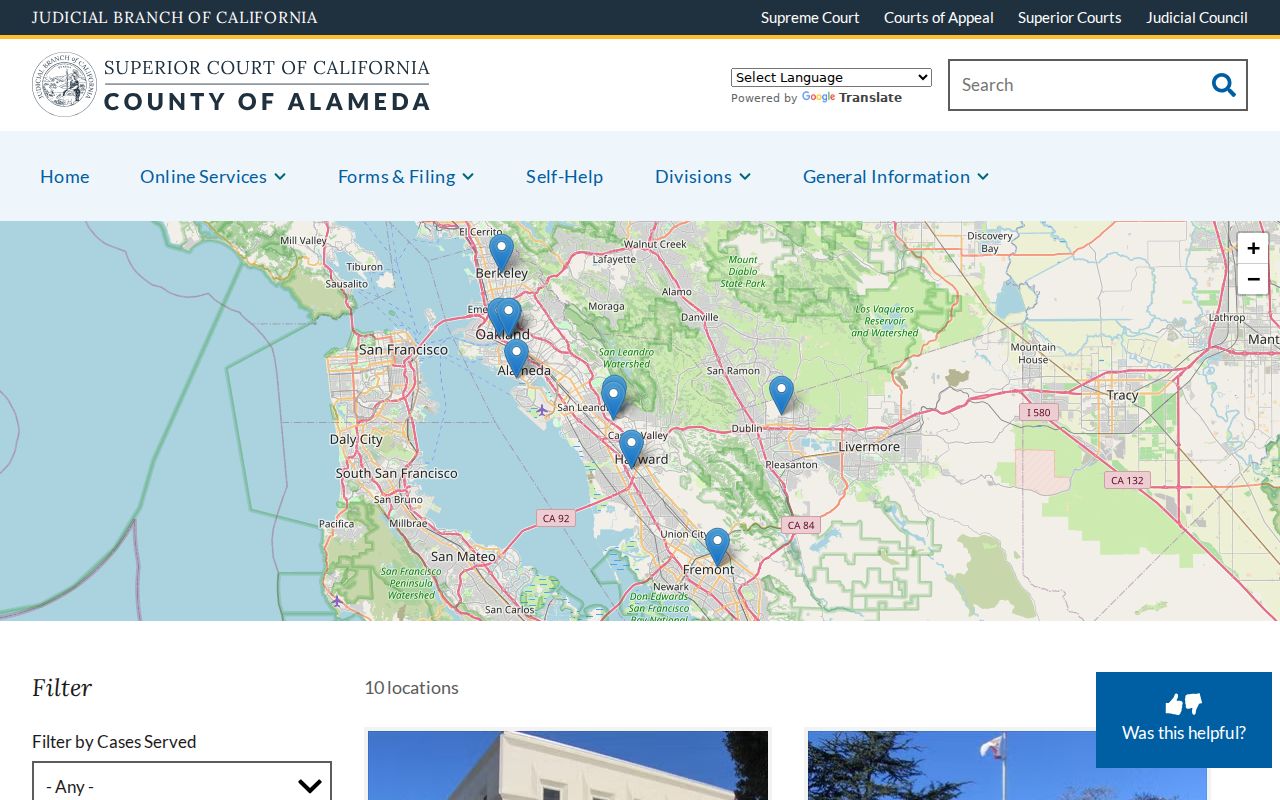
The Alameda court locations page is the right fallback when an online party search does not identify where a Pleasanton file is held.
Historical Pleasanton Resident Directory Trails
The older Pleasanton record trail is spread across licensed databases and local primary sources. Pleasanton Library offers Ancestry Library Edition inside the building, HeritageQuest through library and authenticated home access, and Fold3 for military collections. Museum on Main’s Sandi Thorne Research Center adds newspapers, maps, photographs, clippings, and local organizational history. The library’s city-directory and census material can supply a dated address; a newspaper can add a marriage, death, property, club, or civic detail.
The newspaper survival pattern is unusually concrete. Museum holdings include selected bound Pleasanton Times years from 1951 through 1971, digitized nineteenth-century issues, a strong 1929 to 1933 run, and microfilm from the 1890s and later Pleasanton and Tri-Valley papers. There is no verified exhaustive publisher and year list for Pleasanton city directories, so a missing directory entry must not be treated as proof that a household was absent. The detailed collection trail belongs in the Pleasanton city directory collections page.
Pleasanton Library and Museum Sources
Pleasanton Library, at 400 Old Bernal Avenue, is the practical first stop for historical searching. Its listed phone is (925) 931-3400. The schedule gives Monday and Thursday access from 10 a.m. to 6 p.m., Tuesday and Wednesday from 1 p.m. to 9 p.m., Friday and Saturday from 9 a.m. to 5 p.m., and Sunday closed. Verify holiday changes before a visit. California residents may obtain a free card, but each licensed database has its own access rule.
Pleasanton Library resources identify the genealogy and research starting points. Museum on Main, at 603 Main Street, lists (925) 462-2766 and maintains the Sandi Thorne Research Center. A staff or volunteer may point to a newspaper issue or vertical file, but the collection is still a discovery aid. Confirm important facts through the county or state custodian.
California State Records Add Pleasanton Clues
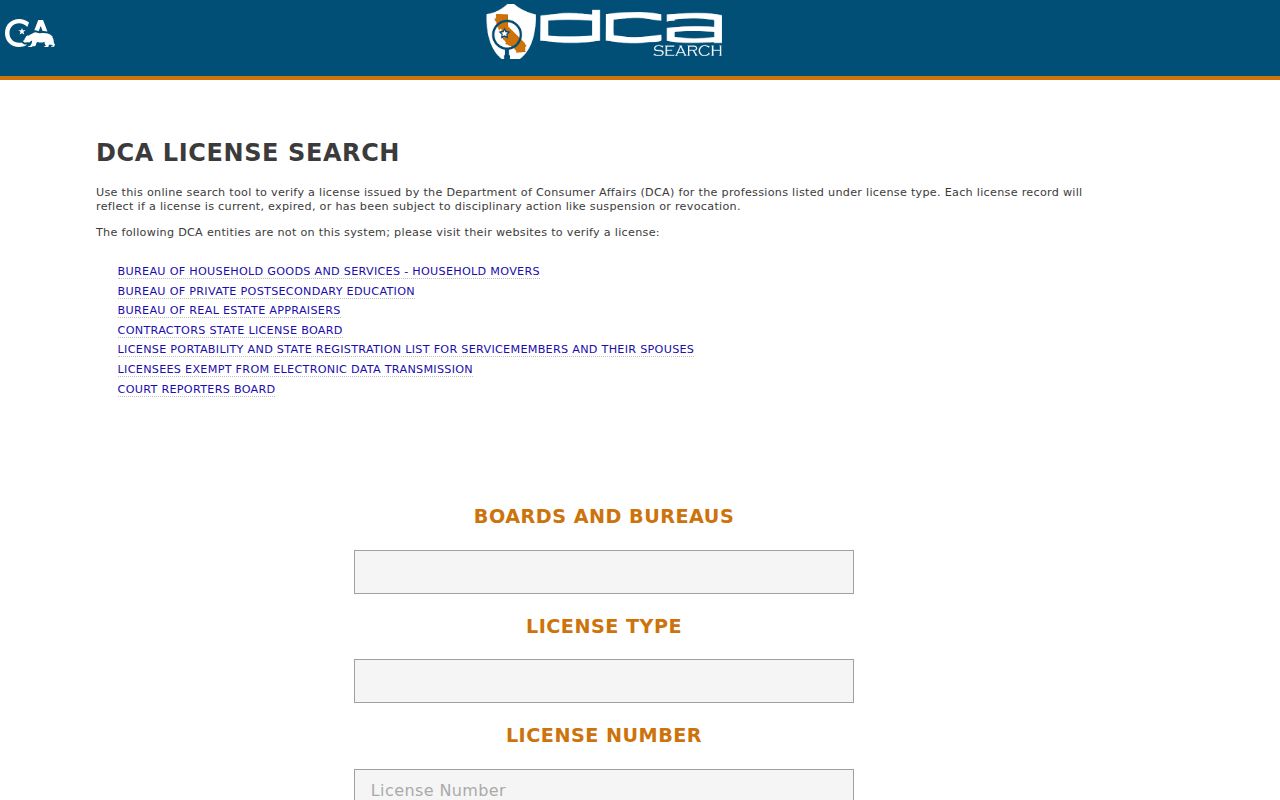
State-level sources can confirm a public role without proving a home address. The Secretary of State’s bizfile Online search covers corporations, limited liability companies, and limited partnerships. A filing may show an agent, officer, manager, status, or filing address. An agent address can belong to a service company. The Department of Consumer Affairs license search can show a licensee, board, status, and public address fields that vary by board. County fictitious business-name filings complete a different part of the business trail.
Unclaimed-property results are also clues, not current-residency records. A name match means property was reported under that name and a last-known city or address context. It does not establish where a person lives now. For family research, a name, business role, or dated parcel link becomes stronger when another independent record matches the person, place, and time.
California’s current vital-record changes also matter for a timely Pleasanton search. The 2026 state fees are $31 for birth, $26 for death, $19 for marriage, $18 for dissolution, $23 for fetal death, and $28 for stillbirth. California now permits specified diacritical marks through the official amendment process. The CDPH vital-record fee information is the source to check before mailing an application.
The California Secretary of State bizfile Online search can connect a Pleasanton name to a filed business role.
The California Department of Consumer Affairs license search provides a second public-role source for some Pleasanton names.
Pleasanton Custody and Registry Checks
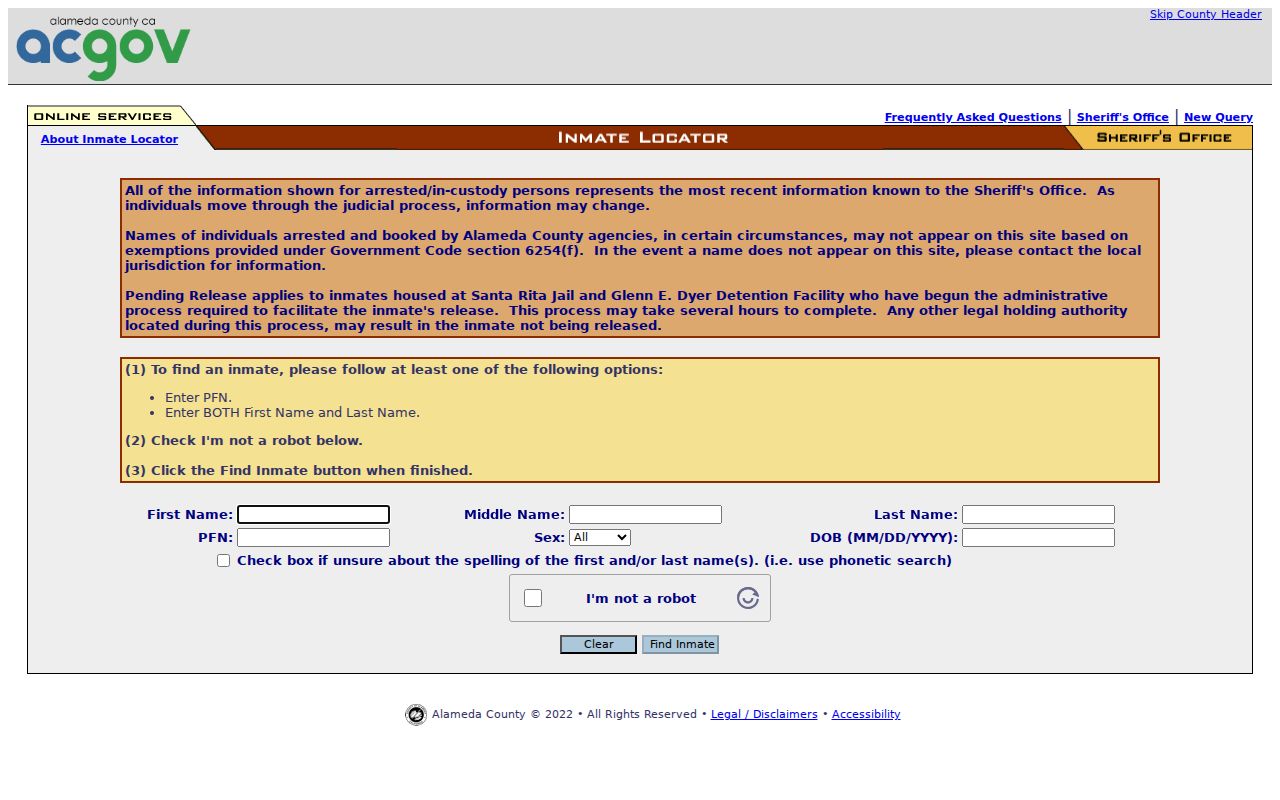
Some public search tools cover a legal status rather than a complete resident list. The Alameda County Sheriff inmate locator is a jail-custody snapshot. Published charges are not convictions, and custody changes quickly. The California Department of Corrections and Rehabilitation locator covers state prison custody, not every county jail booking. California Megan’s Law has its own disclosure limits and legal-use warning. These tools should be checked on the date needed and never treated as an all-person directory.
The Alameda County Sheriff locator shows why a custody search belongs to a specific agency and date.
Protected Pleasanton Addresses and Safe at Home
Some missing results are intentional. California’s Safe at Home program provides eligible survivors and specified threatened people with a substitute mailing address, confidential voter registration, and related protections. A protected address may prevent a public trail from lining up with a current location. Recorded documents can also have statutory redaction processes for certain unlawfully displayed identifiers or protected-address situations.
California privacy rights include knowing, correcting, deleting, or limiting covered business data in defined circumstances. The California Delete Act creates a data-broker deletion process whose current operation should be checked with the California Privacy Protection Agency. These tools do not erase every historic public record. When a result is wrong, correction belongs with the custodian that created it: assessor, recorder, court, license board, elections office, or city department.
Lawful personal use. Pleasanton records are for legitimate research, family history, civic understanding, and personal safety awareness. Never use a name, address, or record trail to stalk, harass, threaten, or harm another person.
A Two-Source Pleasanton Identity Check
A strong Pleasanton resident directory result has two independent supports. For an heir, start with a deceased owner’s deed or death record, then compare probate notices and an obituary. For a former classmate, pair a yearbook or newspaper mention with a later public professional or business record. For an address question, tie the parcel’s APN and legal description to a dated deed, then use a directory or census record to study occupancy at that time.
Keep an evidence log. Record the spelling as published, the role, custodian, date, address type, instrument or case number, and the difference between what is visible and what is inferred. A name match alone is weak. A name plus a recurring middle initial, relative, parcel, occupation, or consistent dated address is stronger. State conclusions narrowly: a person was named in a record, a parcel was assessed to a name, or a household appeared in a publication on a date.
Official, library, museum, and compiled sources serve different roles: verify official fields with the custodian and date, use collections for historical clues, and treat compiled results as leads until the source chain and identity match are clear.
| Source type | Best use | Limit to keep in view |
|---|---|---|
| Official county or state record | Confirm a named field, date, filing, or legal event | Access rules, redactions, fees, and coverage boundaries apply |
| Library or museum collection | Find historical names, household clues, and local context | Runs can be incomplete, licensed, or available only onsite |
| Commercial compiled search | Generate a lead for later checking | May be stale, merge names, or omit the underlying source |
- Roll
- A list kept for an administrative purpose, such as assessment or election work. It is not a complete list of every resident.
- Index
- A finding aid that points to a record. The index may be free while the recorded image or certified copy costs money.
- Parcel
- A defined piece of land identified by an APN and legal description.
- Criss-cross directory
- A historical directory arranged by street and number, useful for an address-era household clue.
When the online route stops, use the right fallback. The county recorder has counter, mail, phone, and copy-order paths. Courts have eCourt, courthouse terminals, and clerk copies. Vital records use county or state applications rather than an open name index. Libraries and museums provide historical discovery sources. A narrow CPRA request can seek an identifiable Pleasanton city record, but it cannot force an office to create a new resident list or override a protected record.